Category: Contemporary

  • Giovanni Sciarrino

    Giovanni Sciarrino

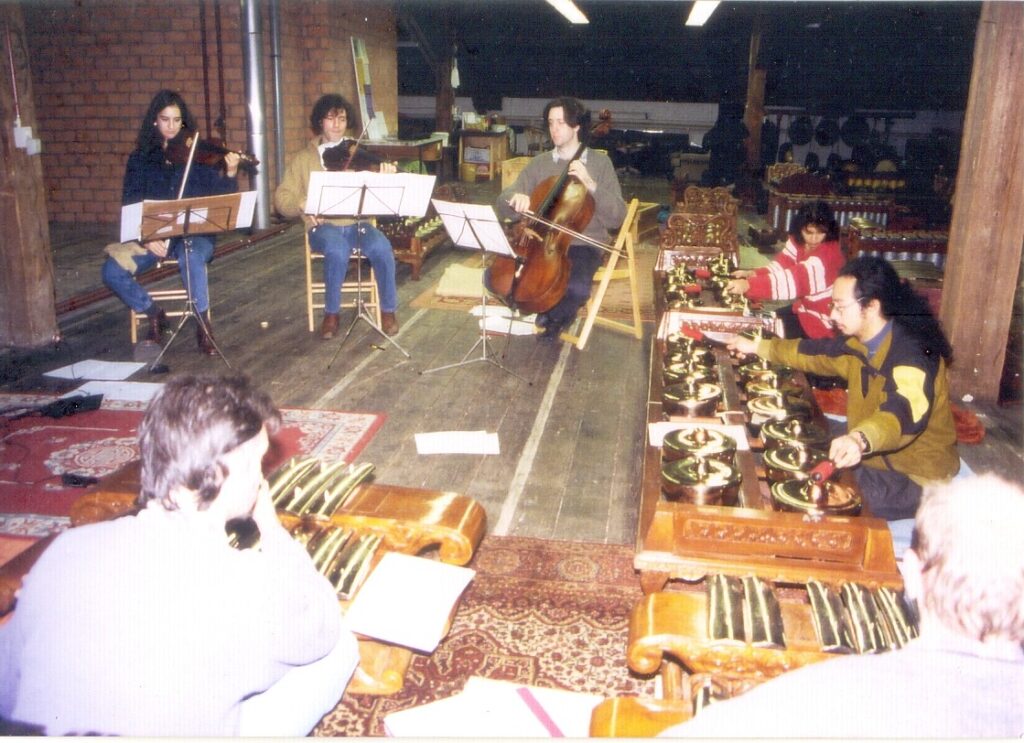
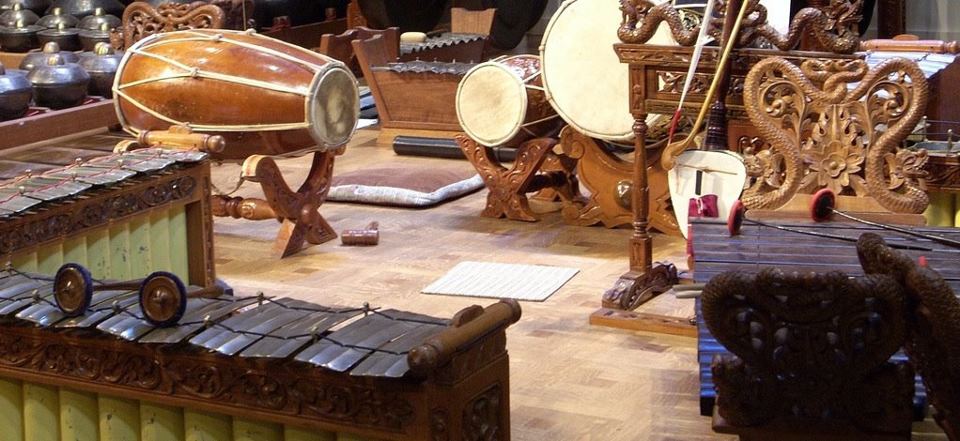
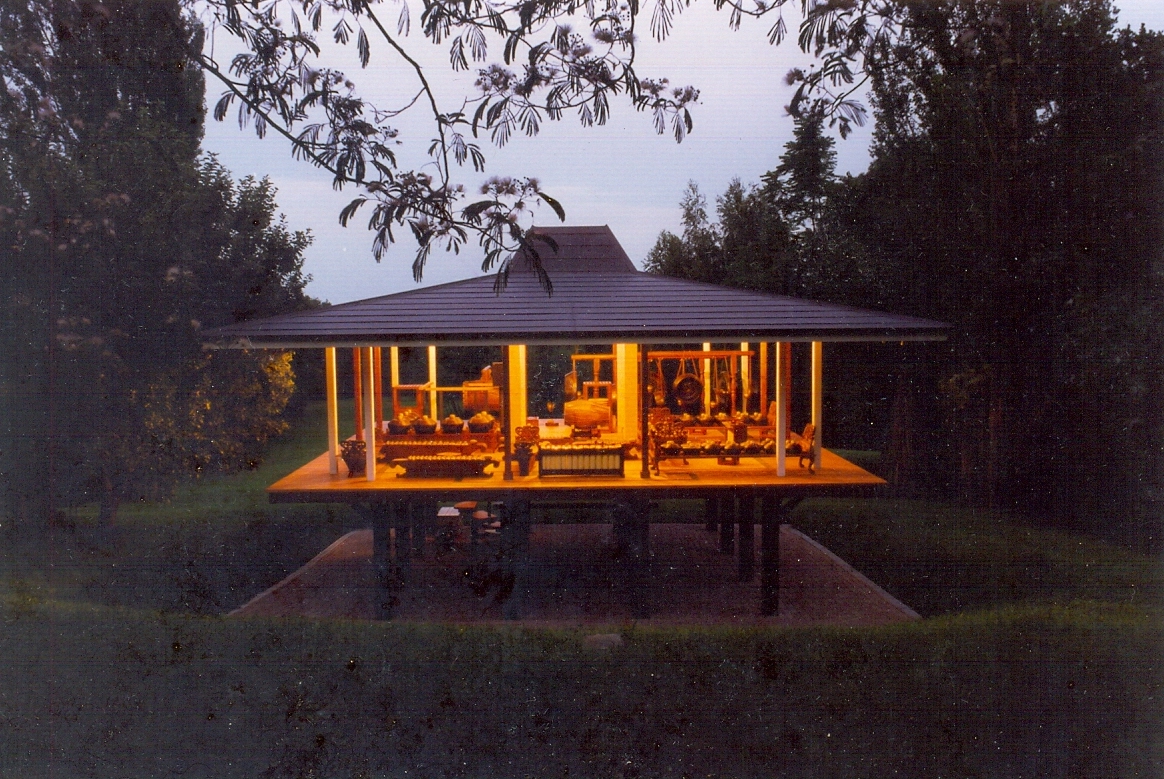
    Pak Suhirdjan made the pelog section, ‘Kaduk Raras‘, of the Montebello Gamelan. This complete Javanese gamelan has the unique characteristic–outside of Java–of being housed in its own open-walled pendopo. But apart from this nice environmental and acoustic aspect, the gamelan is definitely and unfortunately underused: in the given geographic and cultural context–a rural area in Northern Italy–it has not been possible to set-up regular activities. The fine craftsmanship of the instruments has been appreciated in the rare occasions of their being played at home, and on their being lent to prestigious organizations for special events (Monaco, Turin).

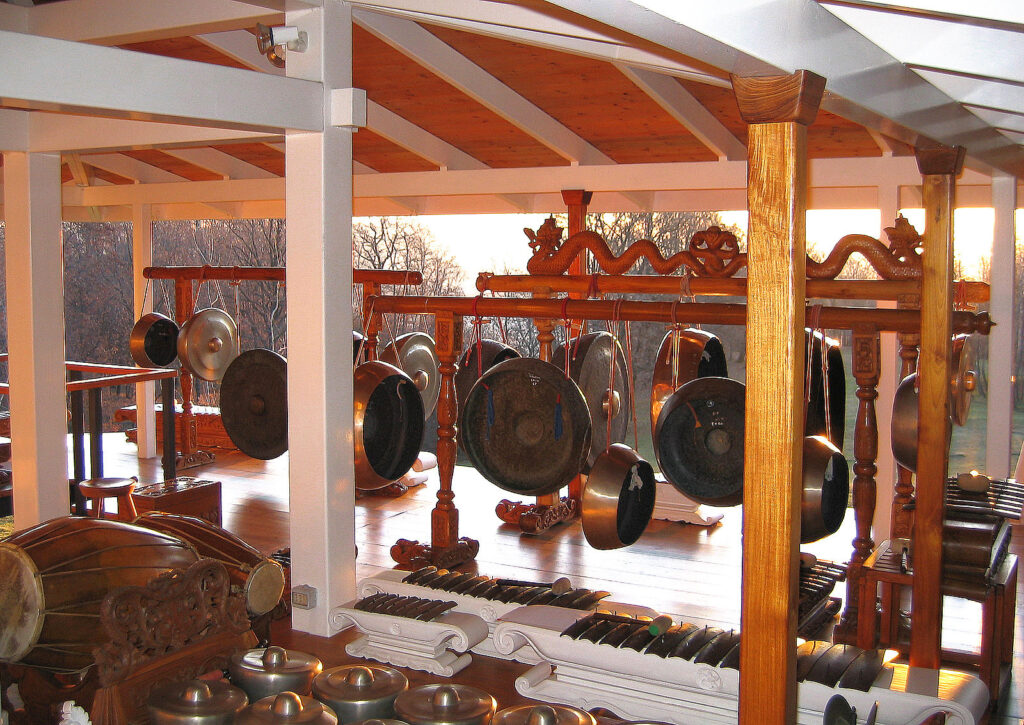
    Pak Suhirdjan also made a set of excellent chromatic instruments in the Western scale, namely:

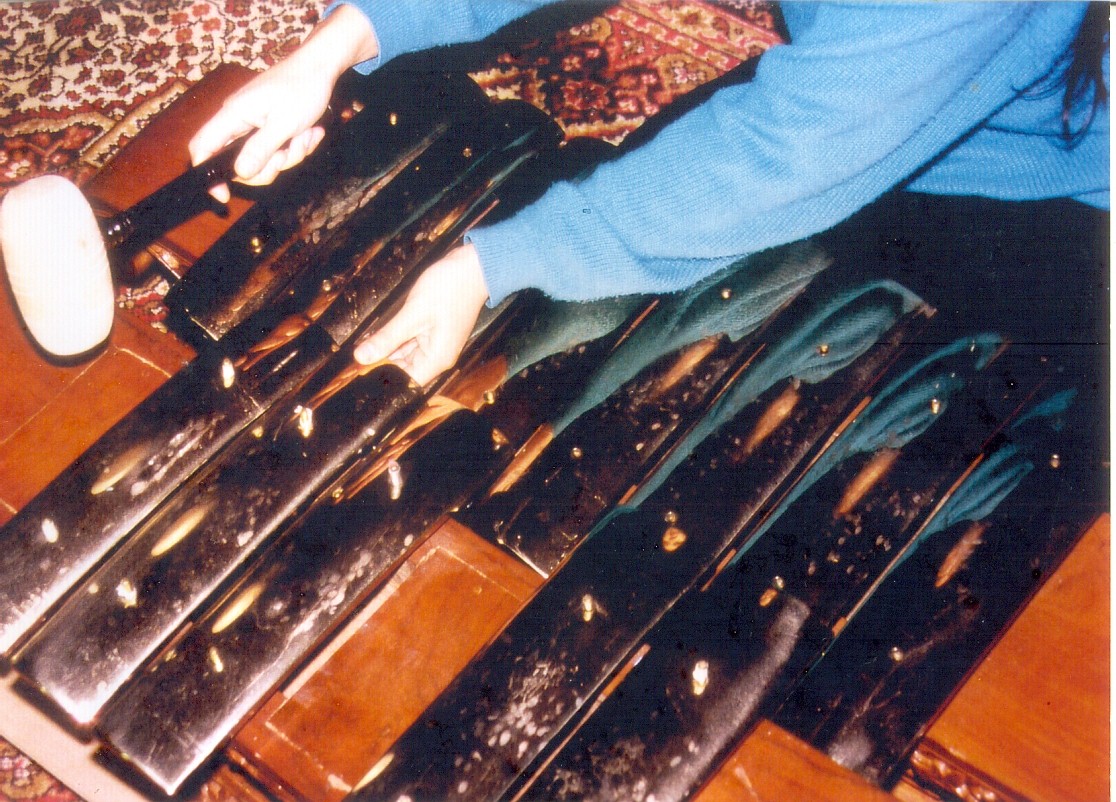
    • three twelve-note bronze genders covering three octaves,
    • three twelve-note iron sarons covering three octaves,
    • forty-eight iron bonang plencon covering four octaves.

    Giovanni Sciarrino
    (John Noise Manis)
    www.gamelan.to

  • Harvey Mudd College

    Harvey Mudd College

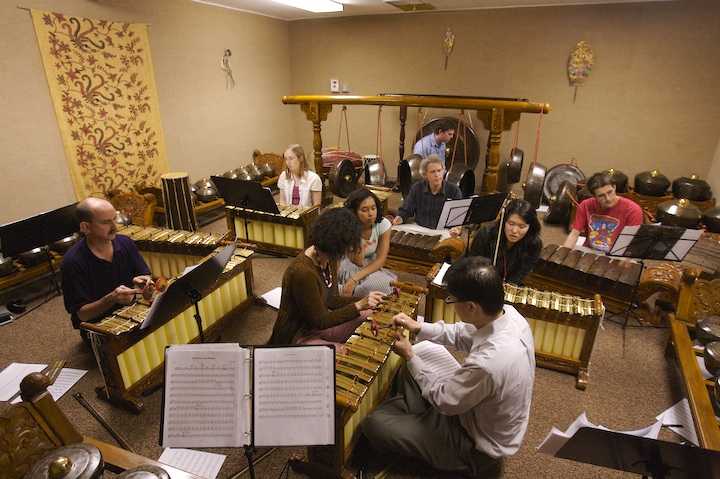
    Suhirdjan built the instruments for the HMC American Gamelan, currently in use in Claremont, California. It is a set of iron and brass instruments tuned to my own versions of pelog and slendro. We perform new works composed by myself, Lou Harrison, invited composers, and students, often combining Western instruments with those of mas Hirdjan. We have released a CD with these instruments called Imbal-Imbalan, and they can also be heard on the DVD Celestial Dance.

    Some compositions: https://soundcloud.com/bill_alves

    Bill Alves
    https://www.billalves.com/


  • Multifoon Foundation

    Multifoon Foundation

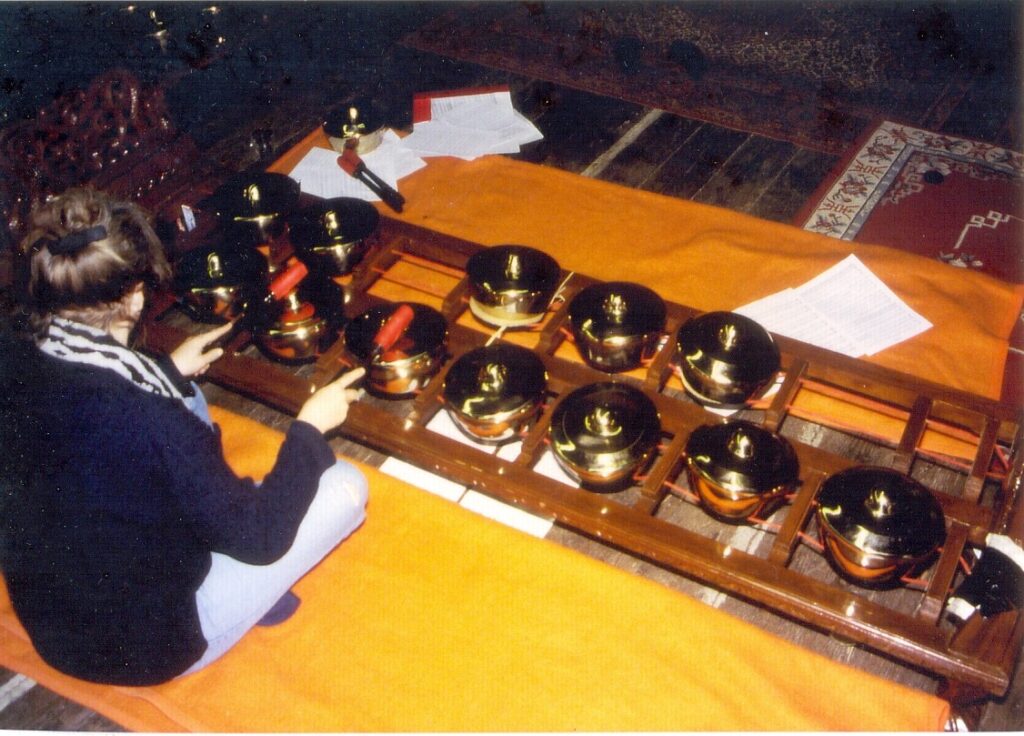
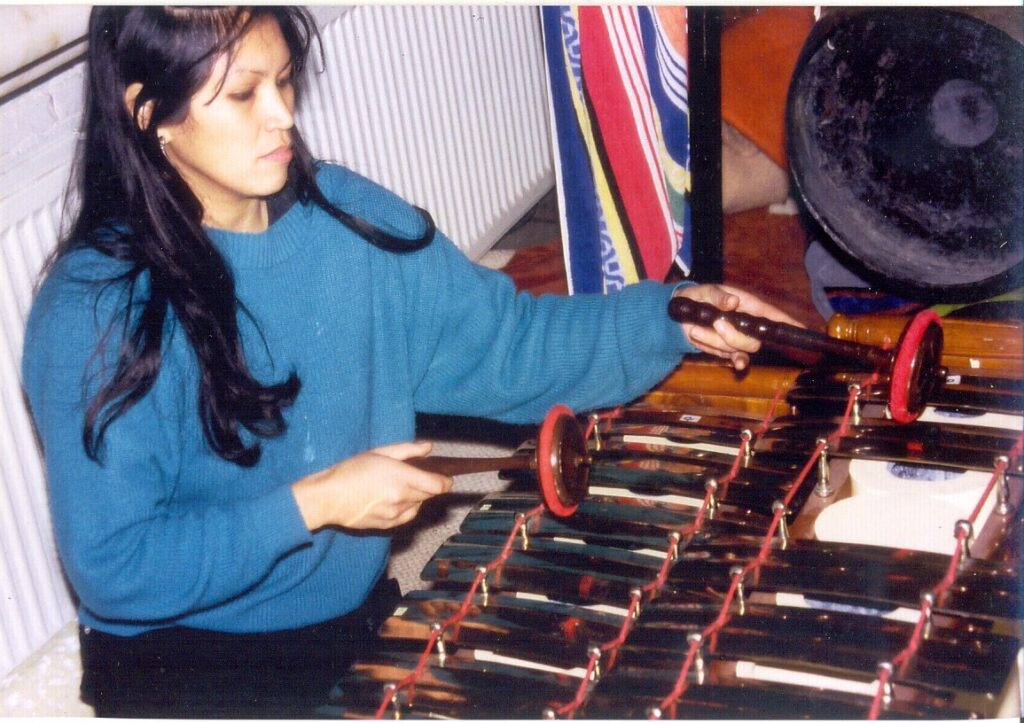
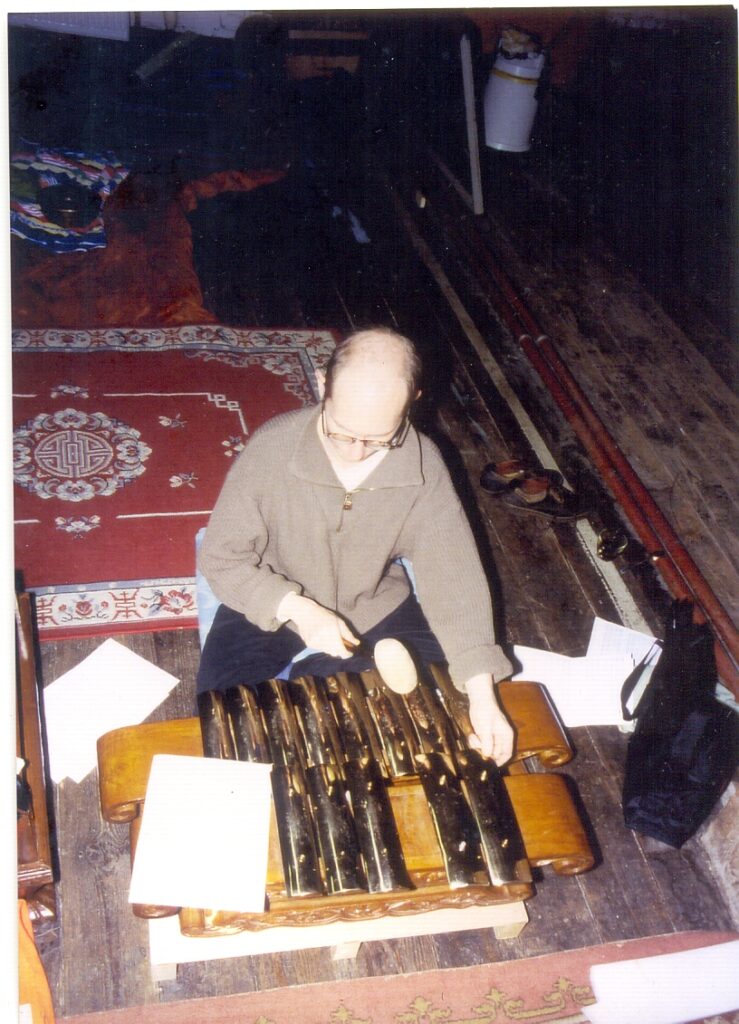
    Sinta Wullur founded Multifoon Foundation in 1993 to stimulate the interaction between non-Western music and contemporary music. She commissioned a 12-tone chromatically tuned gamelan. The slenthem, demung, saron, and peking are set on two frames, with the keys arranged similarly to a piano keyboard. The bonang is a single octave, with the pots arranged similarly to a piano keyboard.

    In 2000, a second order was made for 12 kempul, a two-octave bonang panerus, a one-octave bonang panembung, two extended sarons (two-and-one-half octaves), a complete set of kenong, gender barung, and gender panerus. Wind instruments and violins were added to the ensemble, which performed commissioned compositions. To counter the tendency of new bronze to rise in pitch, Suhirdjan submerged the bronze keys and all knobbed gong chimes and gongs in water for 4-5 months before tuning them.

    The gamelan was played in the Concertgebouw by the Concertgebouw Orchestra in Amsterdam in the Gamelan Symphony by the composer Peter Schat. The complete chromatic gamelan set combined with choir, strings, winds, and percussion instruments was also used in the performance of Sinta Wullur’s Ramayana opera “Sita’s Liberation” at the International Gamelan Festival Amsterdam 2007.

    Sinta Wullur
    contact@sintawullur.com
    www.sintawullur.com


  • Open Arts

    Open Arts

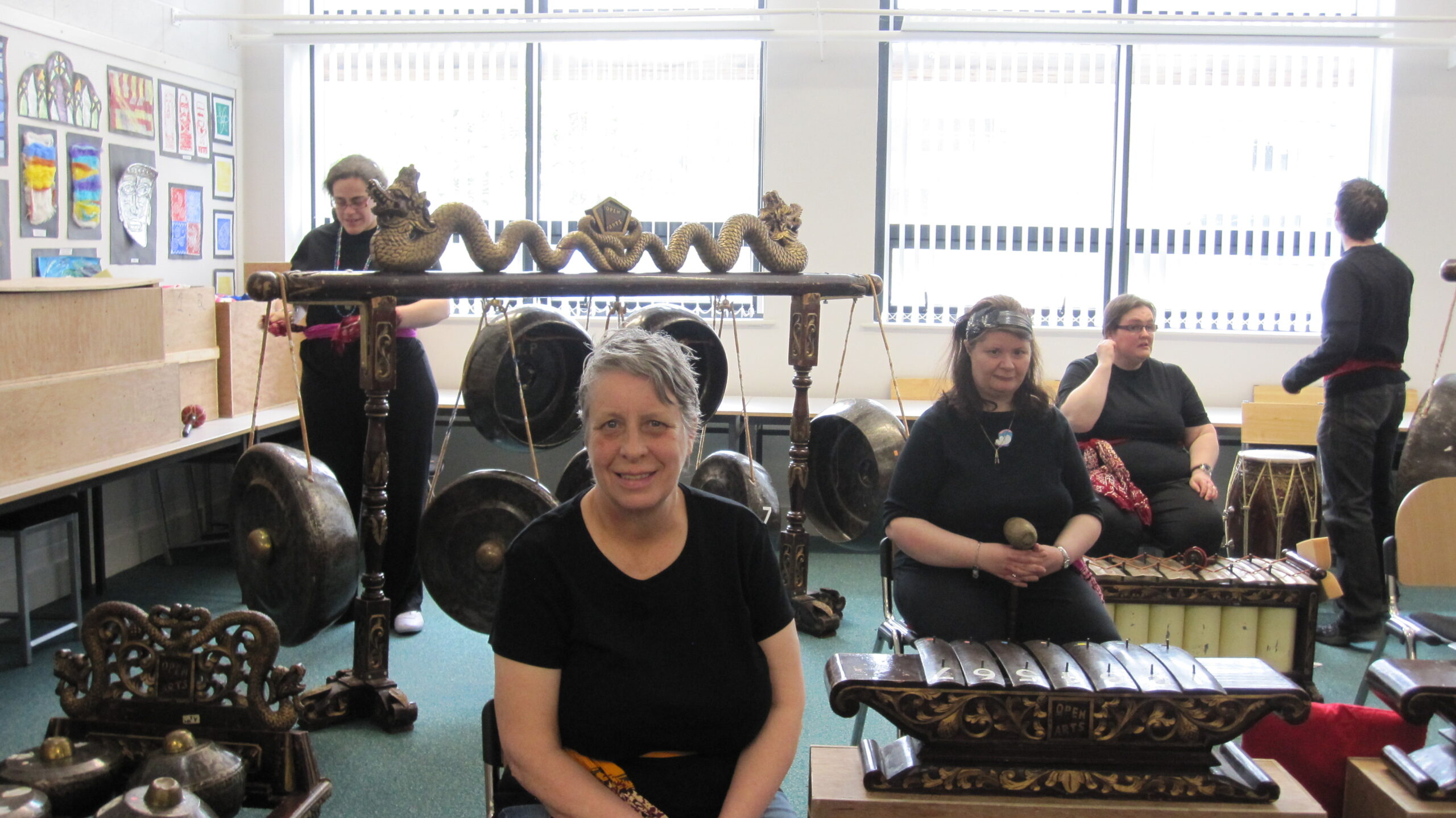
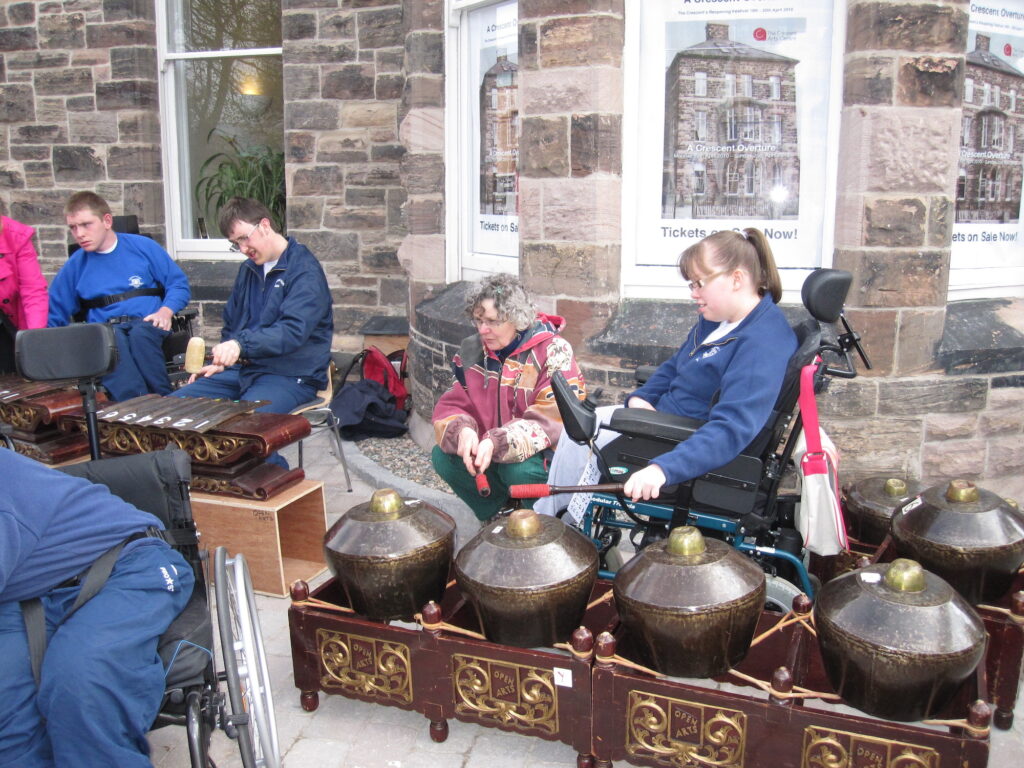
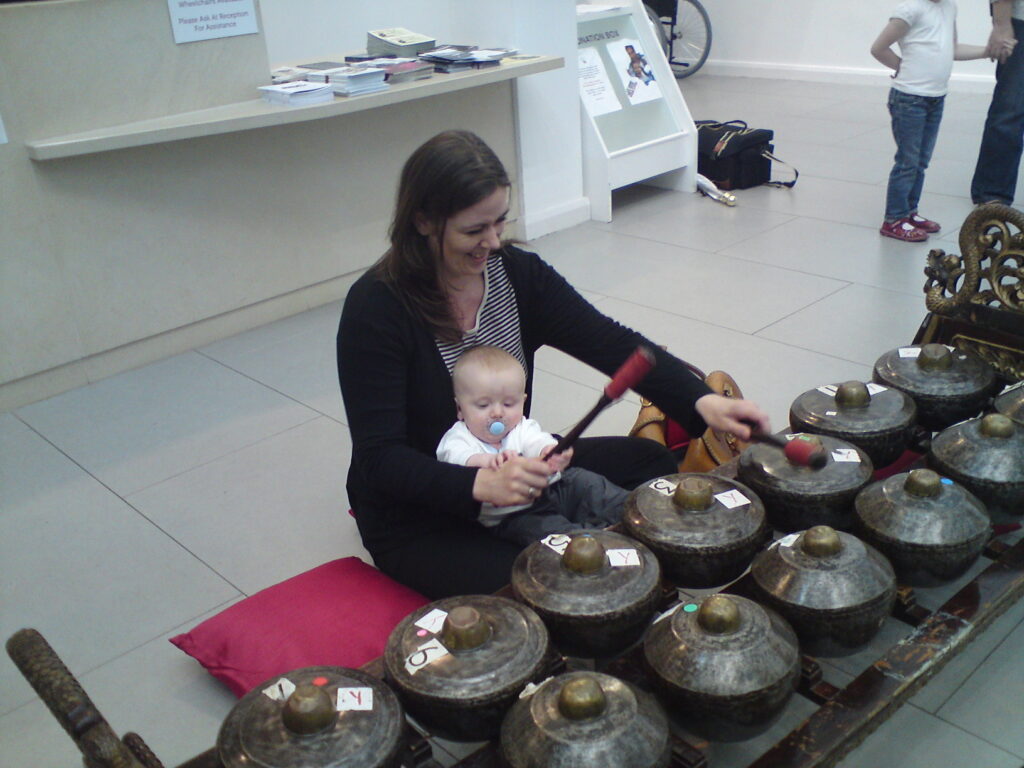
    We are based in Belfast, Northern Ireland. We use our lovely gamelan for community groups and often with people with disabilities, so it’s become a little battered over the years, but it still attracts a huge amount of attention and it is still beautiful. We play it outside in the summer some days, in parks and outside the City Hall and it visits places like museums and schools. It is usually based in Stranmillis College.

    Our gamelan has travelled all over Northern Ireland but it recognises no borders. It has been down to Cork, to Galway and to Dublin in the Republic of Ireland where it has brought the same pleasure to the groups who play it!


  • Sedulur Gamelan / Gamelan Sisters

    Sedulur Gamelan / Gamelan Sisters

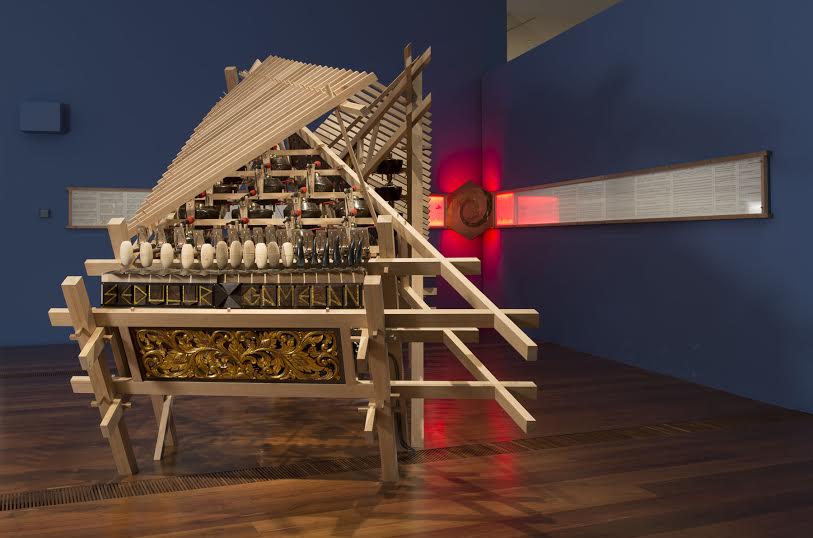
    Sedulur Gamelan/Gamelan Sisters consists of two interlocking wooden structures that reconfigure elements of traditional Javanese architecture through the De Stijl philosophical principles of neoplasticism to create an abstraction of an 18th century double grand piano.

    These two cases house 56 bonang plencon that have been automated to function as a self-governing electro-mechanical orchestra. Performing musical transcriptions of drawings by American artist Robert Smithson.

    The work is on display at the National Gallery of Victoria in Melbourne, Australia (https://ngv.vic.gov.au/); 22 Nov 2013 – 23 Mar 2014.

    Rohan Drape
    Slave Pianos
    https://slavepianos.org
    rohan.drape@gmail.com

    Photo credit: Naima Morelli


  • Gamelan Pacifica

    Gamelan Pacifica

    In 1987, Gamelan Pacifica director, Jarrad Powell, commissioned the building of a new gamelan in Java to expand the instrumentation of their ensemble. The new gamelan was a full slendro/pelog set with some instruments built of iron and some of bronze. Suhirdjan built the iron instruments in Yogyakarta, while Tentrem built the bronze instruments in Surakarta. Subsequently, a gamelan in the Cirebon style was purchased from Endo Suanda, one of Cirebon’s most noted topeng dancers and musicians.

    Gamelan Pacifica would like to thank all the instrument builders who have explored the possibilities of gamelan instruments throughout many centuries. Their combined perseverance, knowledge, and innovation have manifested a marvelous musical idiom of ancient depth and limit-less possibilities. We are especially grateful to Suhirdjan, whose commitment to gamelan building came at just the right time to benefit Gamelan Pacifica and music lovers in the Northwest.

    Jarrad Powell
    Director
    Gamelan Pacifica
    Seattle, Washington, USA
    jarrad@gamelanpacifica.org
    https://gamelanpacifica.org


  • Gamelan Naga Mas

    The gamelan ordered by the Scottish Chamber Orchestra in 1995 is currently housed at the Royal Conservatoire of Scotland. The pelog set is actively played by Naga Mas. The gamelan will be used in the Conservatoire’s teaching and community outreach programs.

    In September 2015, they are planning to celebrate the 25th anniversary of gamelan in Scotland.

    Gamelan Naga Mas
    Campbell House
    Gartnavel Royal Hospital
    1055 Great Western Road
    Glasgow G12 0XH
    info@nagamas.co.uk
    https://www.nagamas.co.uk/


  • Alan Zimmerman

    Alan Zimmerman

    I have no experience with gamelan as I am strictly a Western-style percussionist. However, I commissioned this unique instrument in order to perform Claude Vivier’s percussion solo Cinq Chansons pour Percussion (1980) – one of the masterworks of the percussion repertoire.

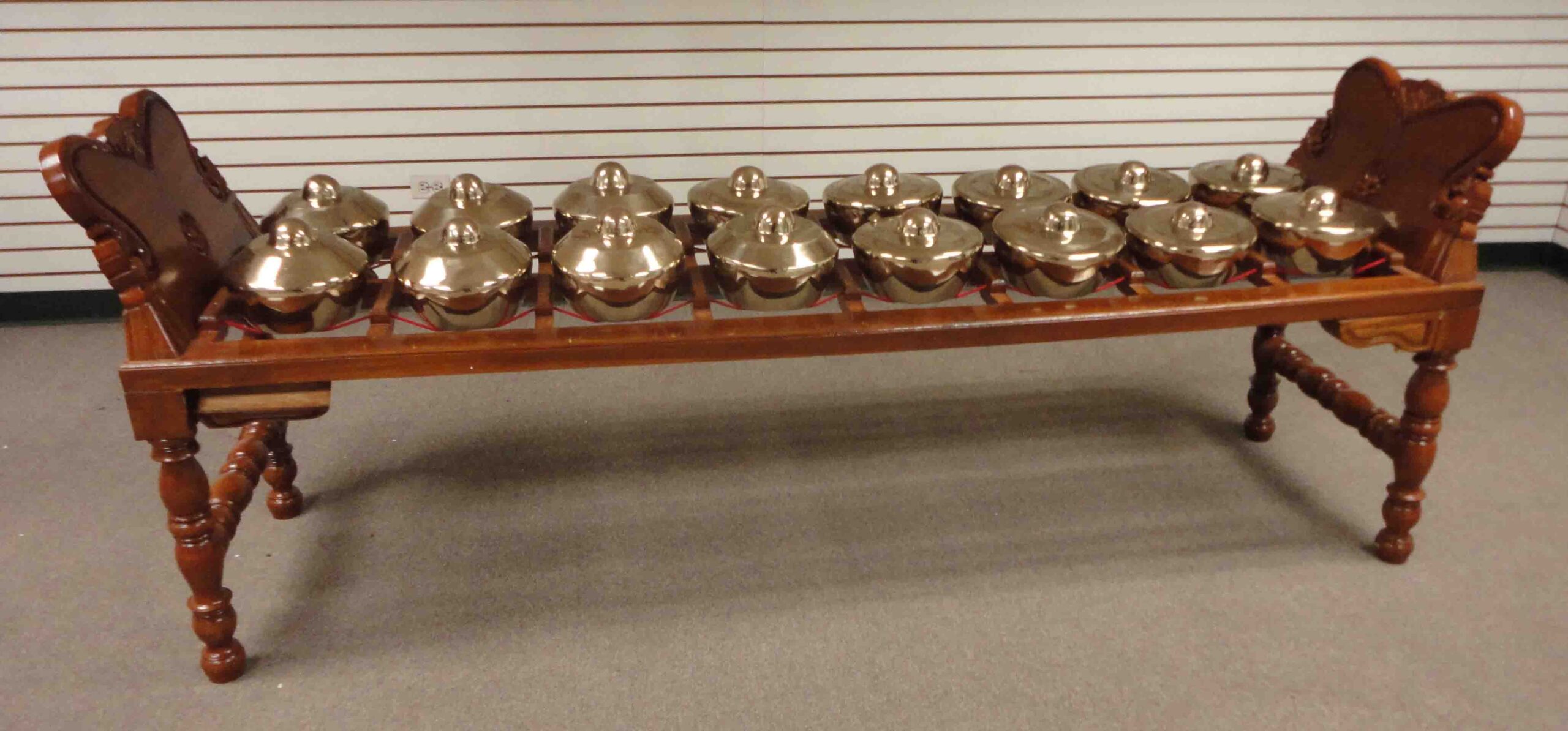
    Vivier’s work requires a bonang consisting of 16 pots tuned to specific pitches from the “chromatic” scale to be played in conjunction with 9 Thai gongs, 3 Japanese temple bells and a large Chinese gong.

    In addition, I commissioned Jody Diamond to compose a new work for this very special instrument. I feel extremely fortunate that mas Suhirdjan was able to create this beautiful instrument before his untimely death. The extraordinary sounds that emanate from this bonang will always be in memory of him.


  • 19 Gongs

    19 Gongs

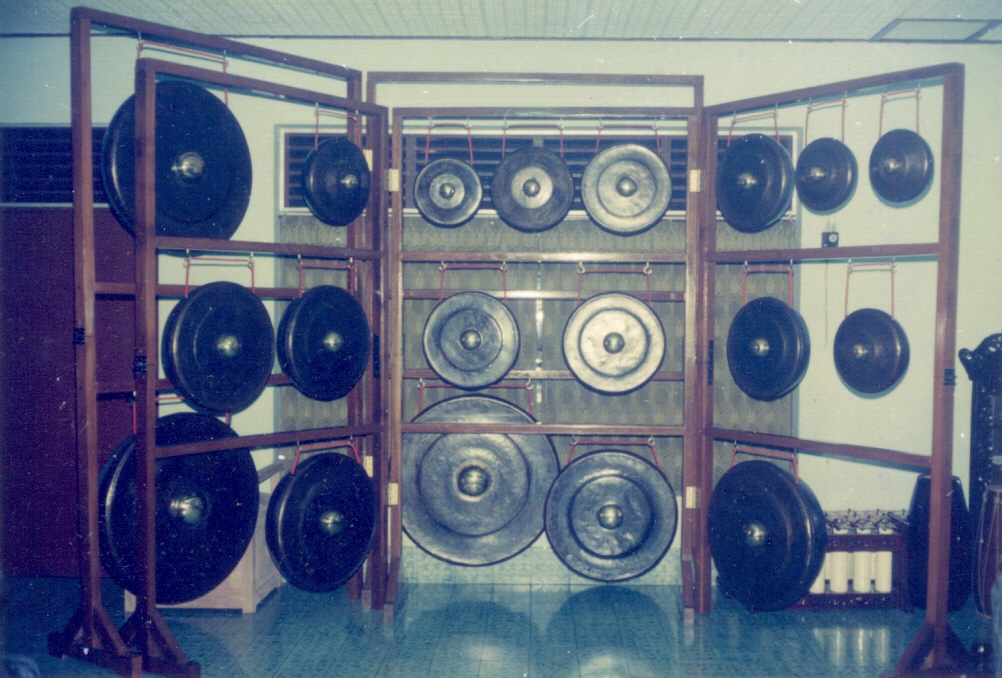
    This set of 19 gongs, ranging from F# to c”, was commissioned by a Dutch percussionist. The gongs were made from iron sheet metal with a brass cap on the boss (plencu). The stands were designed to be knocked down for easy transport and when assembled were adjusted to stand at angles to facilitate ease in playing.