Category: Traditional

  • Giovanni Sciarrino

    Giovanni Sciarrino

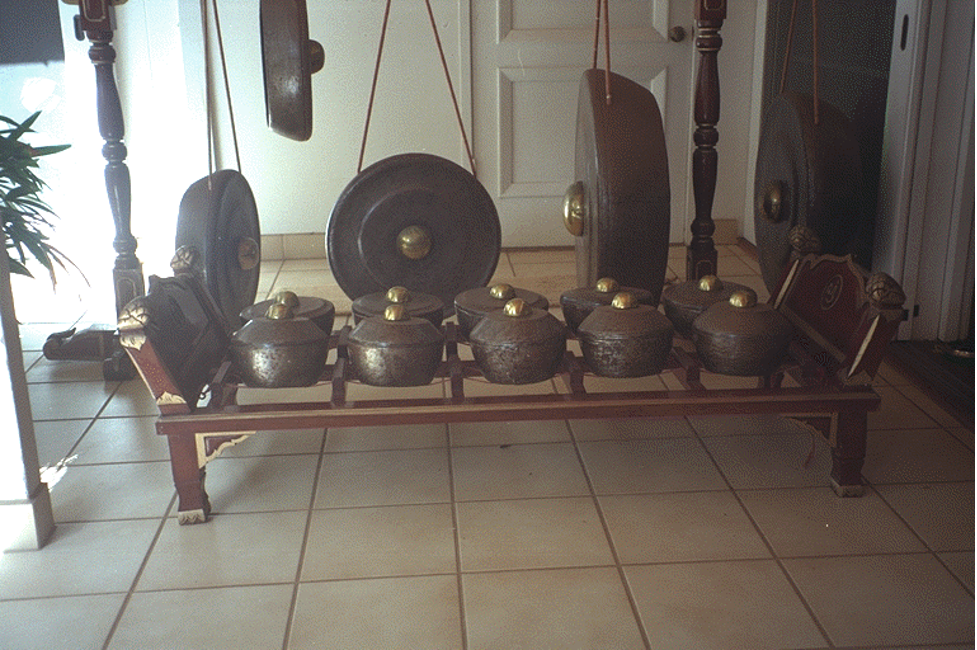
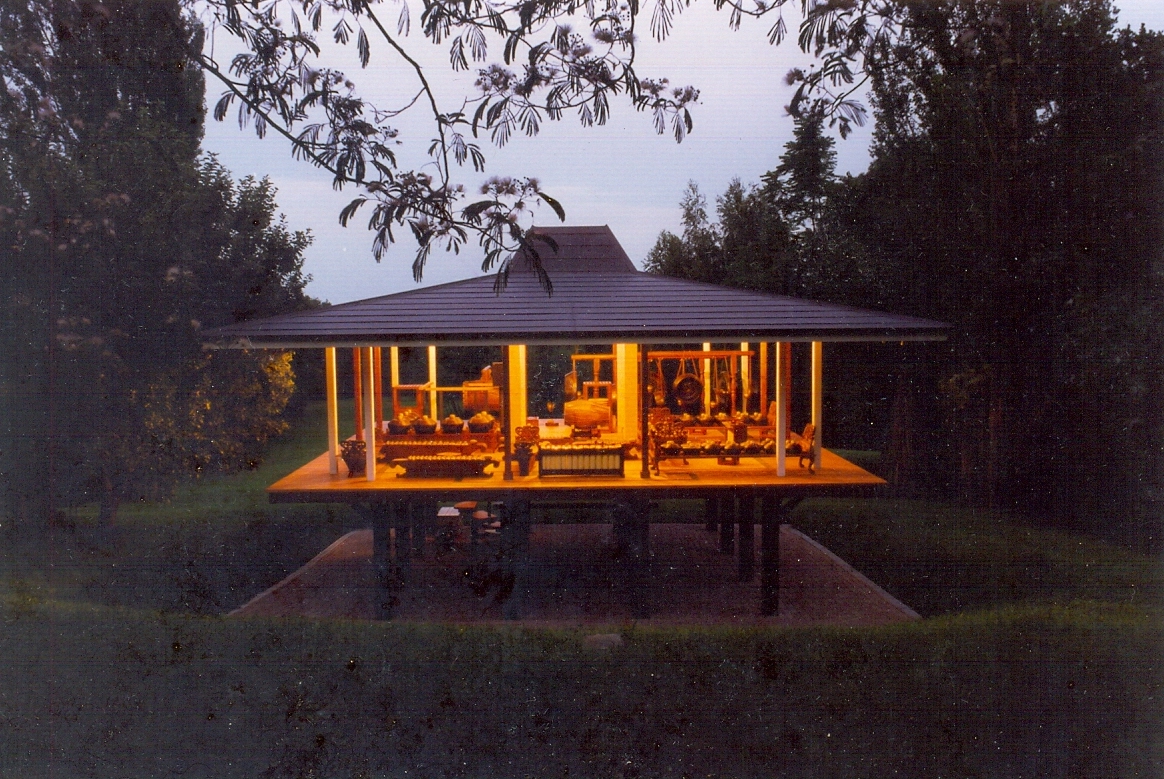
    Pak Suhirdjan made the pelog section, ‘Kaduk Raras‘, of the Montebello Gamelan. This complete Javanese gamelan has the unique characteristic–outside of Java–of being housed in its own open-walled pendopo. But apart from this nice environmental and acoustic aspect, the gamelan is definitely and unfortunately underused: in the given geographic and cultural context–a rural area in Northern Italy–it has not been possible to set-up regular activities. The fine craftsmanship of the instruments has been appreciated in the rare occasions of their being played at home, and on their being lent to prestigious organizations for special events (Monaco, Turin).

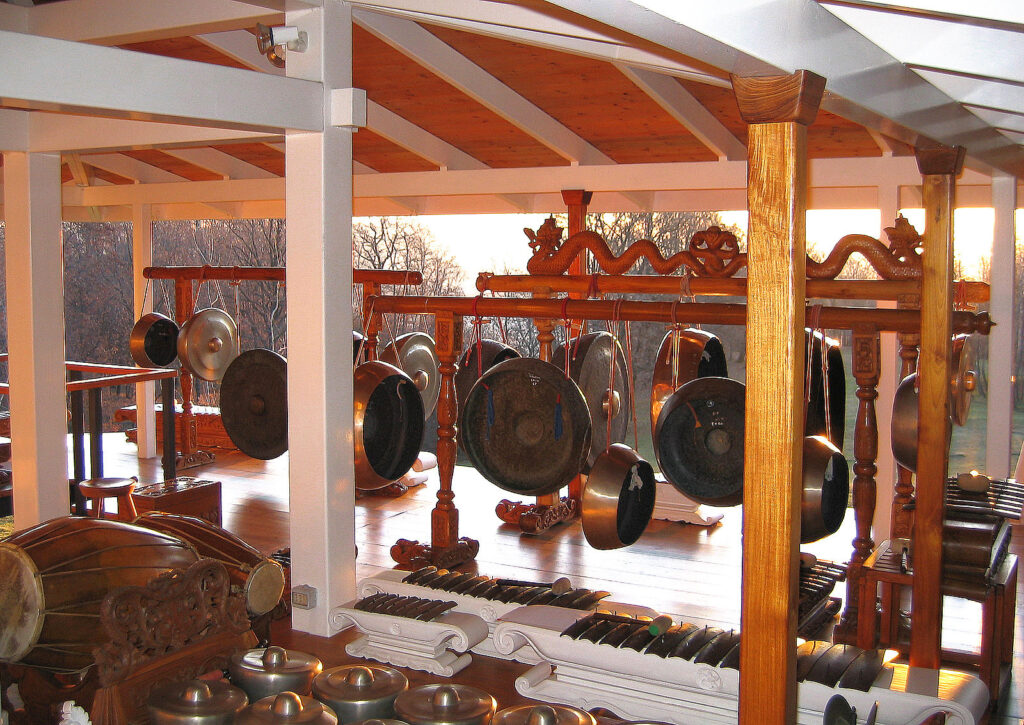
    Pak Suhirdjan also made a set of excellent chromatic instruments in the Western scale, namely:

    • three twelve-note bronze genders covering three octaves,
    • three twelve-note iron sarons covering three octaves,
    • forty-eight iron bonang plencon covering four octaves.

    Giovanni Sciarrino
    (John Noise Manis)
    www.gamelan.to

  • Hull Music Service

    Hull Music Service

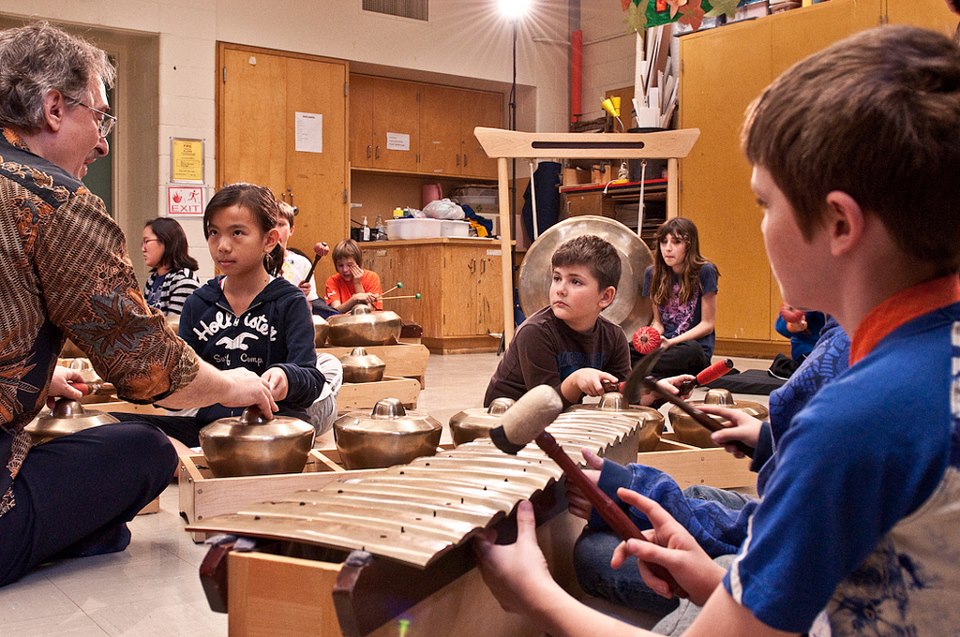
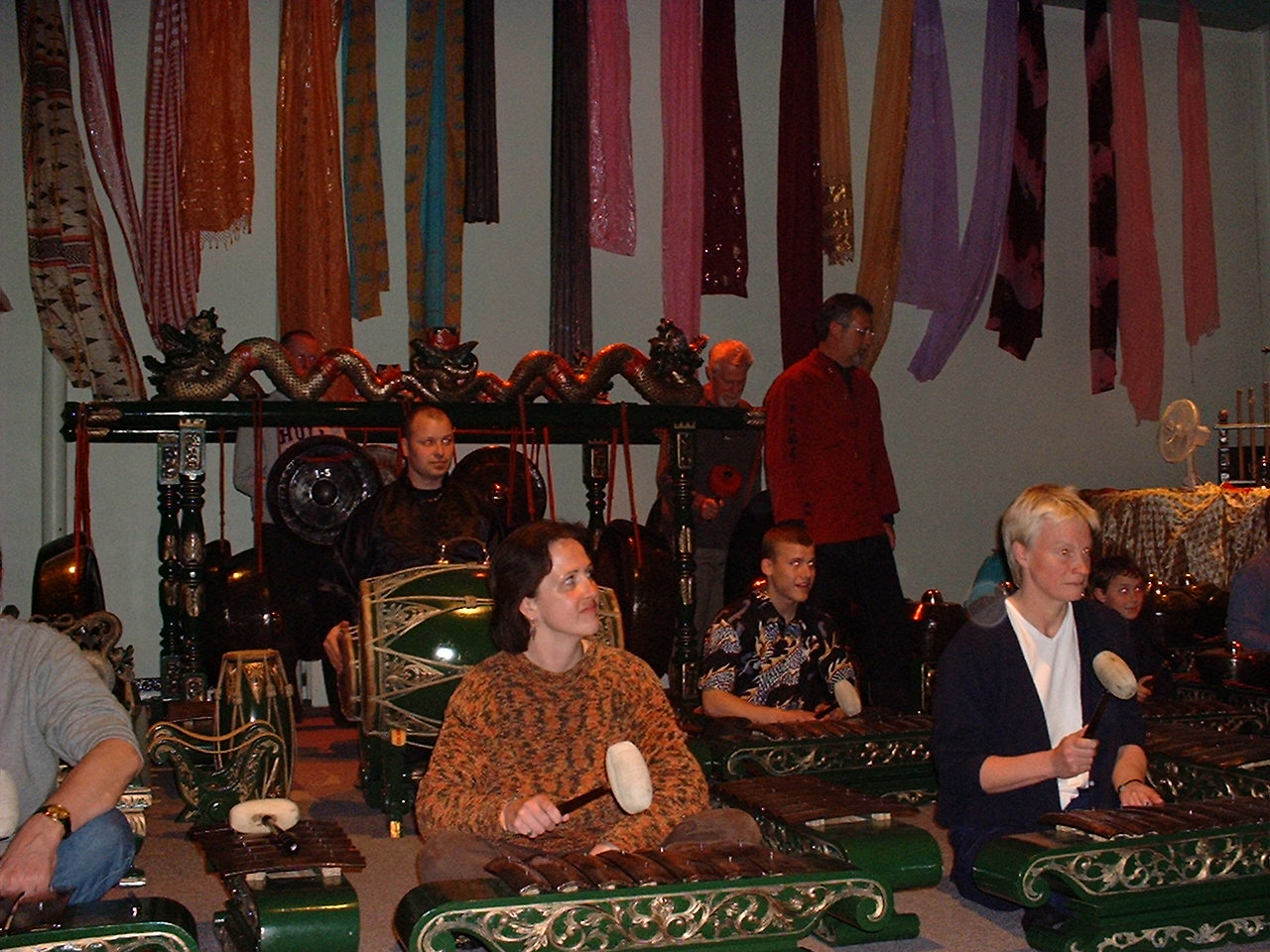
    The Hull Music Service took delivery of our gamelan, Kyai Sri Jaladri Naga, in February 2002. It now lives at the Albemarle Music Centre in Kingston upon Hull in Yorkshire and it is used regularly for workshops with school children, music students and adults, including those with Disabilities and Special Needs.

    Chris Maynard
    Head of the Hull Music Service


  • International School of Amsterdam

    International School of Amsterdam

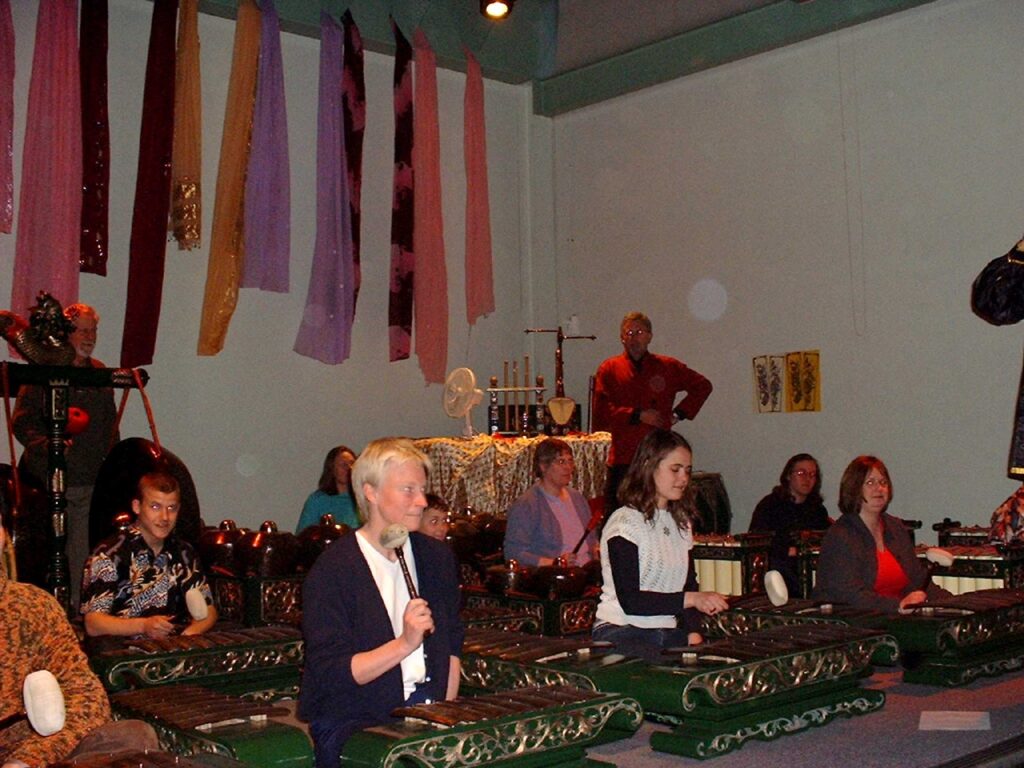
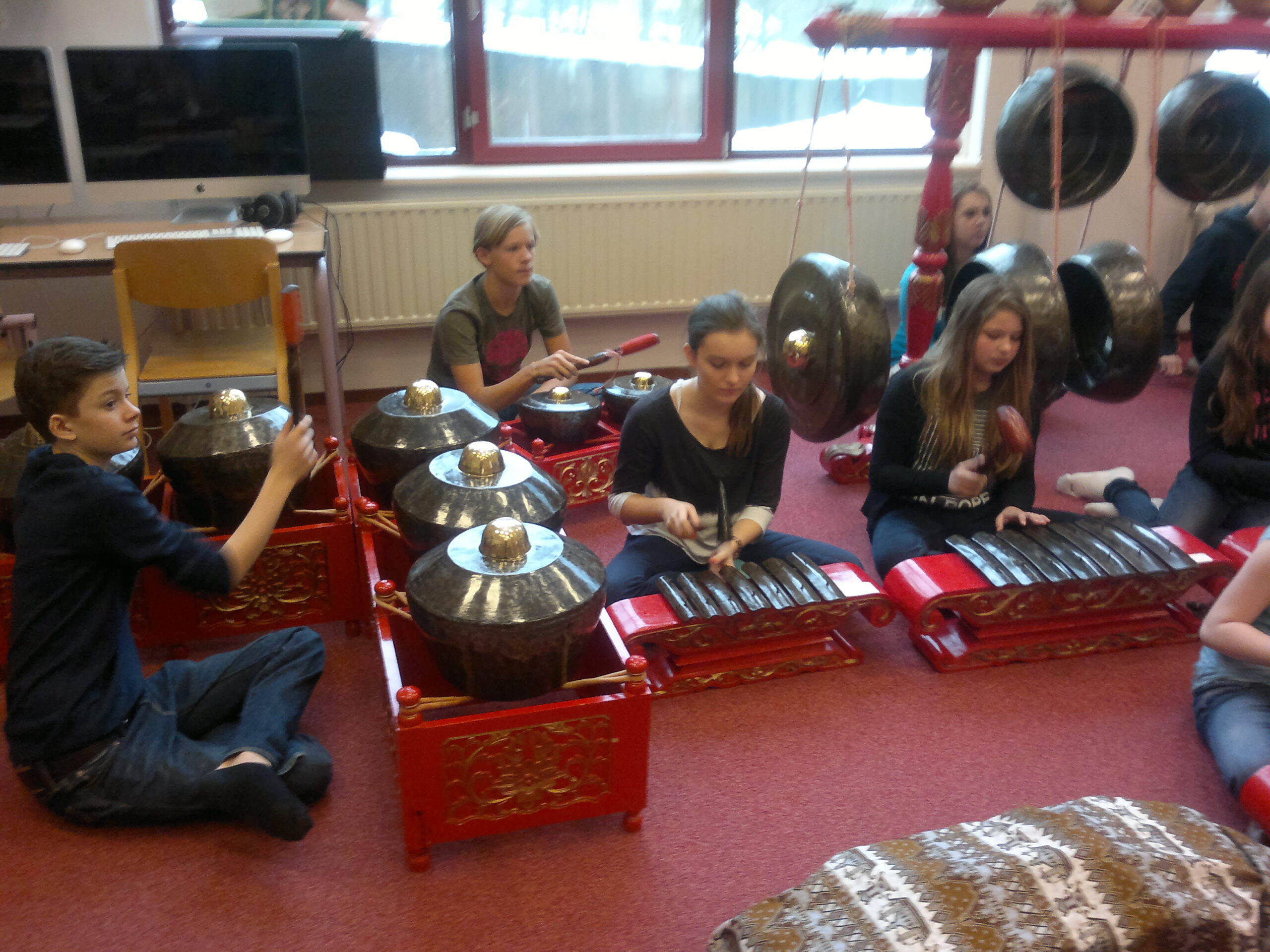
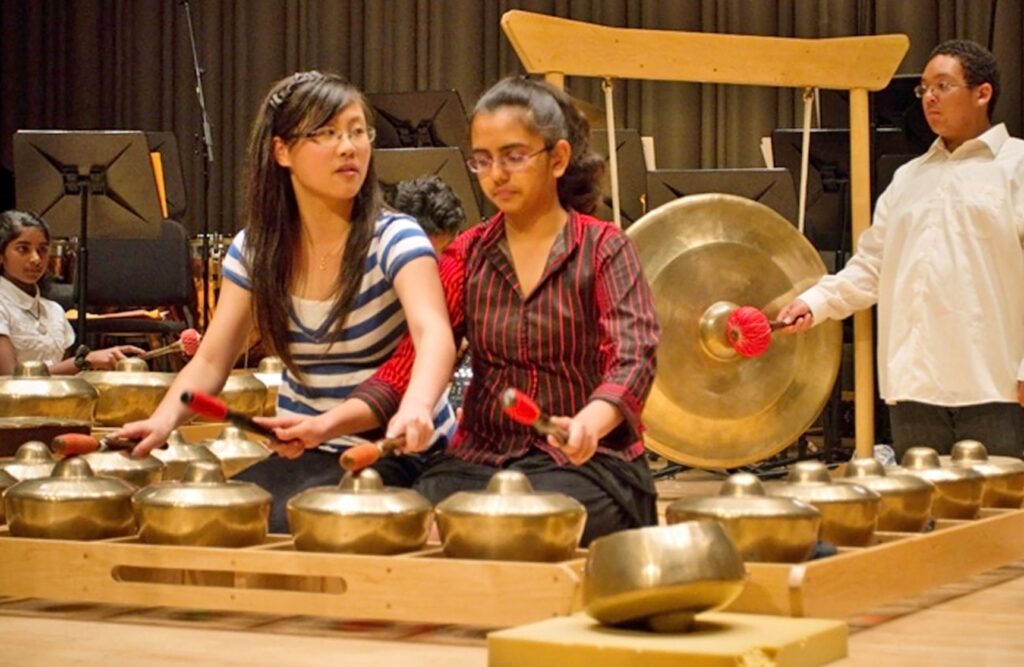
    Gamelan continues to be a constant thread of the Music programme here at ISA from Middle School to 12th Grade providing a real-life entrance into a world and a culture whose concepts and attitude to music are excitingly different from those of the western world, as well as being a readily-accessible practical experience for all students, and creating the powerful sense of community which it both requires, and engenders.

    The students come from: India, Ireland, Italy, Netherlands, New Zealand, Russia, Turkey, United Kingdom, and USA

    Some student reflections on learning Gamelan (click on the categories below):

    7th Grade Spring 2008
    • We helped each other to learn
    • As we make music we develop usually a very calm environment in which all of us contribute
    • Since we are playing the music others have played we’re exploring different ways to play different kinds of music
    • Most important thing I learned was how we can connect together in bonds of music to accomplish something within – that basically says it all
    8th Grade January 2013
    • “….when you play gamelan, you are all one unit and you’re all contributing to this amazingness!”
    • “ …we learn aurally, by listening to the music, and to each other …”
    • “ … I can recognise and remember the melody by listening …”
    • “… we are told not to read the notes, but to ‘feel’ the music, to learn what is coming, and when … to be in a calm state of mind, focused, and relaxed …”
    • “ … it taught me to be focused and relaxed…”
    • “.. it sounds like the instruments are meant to be together as one … they assemble like a puzzle – when we play I feel we are all thinking about the same thing …”
    • “ …all gamelan instruments have their own ‘jobs’… with all the instruments working on their own ‘job’’ the gamelan instruments make the right harmony that sounds very calm, but interesting
    • I like the way you learn by playing
    • Through the music we learn about the culture
    • It is so different
    • When you play all the different instruments you come to understand the way it all fits together
    • It’s difficult to damp the keys at first, but with a lot of practice it comes
    • …. once we knew it, I could tell the music is really beautiful
    • I think playing gamelan links to our social education … because you learn a lot about a different culture while you’re learning the music
    • It’s also fun and we can perform – which is a social thing to do
    • I think gamelan lessons help us ‘to learn how to learn’ – we’re learning how to learn different instruments … and we learn how to play together as a group
    • Learning gamelan includes the ways we have discovered to learn music (by listening, by reading notes, by watching, by numbers, by moving … )
    • Playing gamelan is creative … you’re making music yourselves, that other people have made, on instruments they made
    8th Grade April 2013
    • The most interesting thing I find is that they show a lot of the culture – the music is very different to what we would usually play, but it sounds beautiful Thank you!
    • The gamelan I believe is a very interesting instrument. I think that it has taught me to be calm and focus
    • I have never played it before but I have really found it was easy and exciting to play
    • I really enjoy the slenthem (Christian)
    • The most challenging thing of gamelan is playing at the same time as everybody else
    • The most challenging thing was when I first started and I had to damp as well as play
    • The most interesting thing about the gamelan is how it makes people communicate and cooperate more (Ellen)
    • The most interesting things are the different gongs and kenongs that make different types of sound – they all blend in well together (Miyu)
    • The most wonderful part about gamelan is that we work together as a unit to reach our goal, which means that everyone in the group is proud to succeed (Matt)
    • The most challenging part of gamelan is keeping the same pace/tempo of the music with other instruments
    • The most interesting thing was how everything fitted together in harmony perfectly.  The most challenging thing was no to get lost (Stijn)
    • The most wonderful thing is how all the instruments combine and fit together (Thirza)
    • The most interesting thing was learning to play and seeing my progress (Alexander)
    • The most challenging is playing at the same time with friends (Yuuki)
    • The most wonderful thing is the music
    • I think that the gamelan is a very nice sounding instrument but it takes time to make and play as a group (Luca)
    • Every piece shows different emotions – it can be sad, but also happy (Jella)
    • Gamelan is all about working together and working with the sounds in order to do your part, and using the music to explore the culture (Carmen)
    • Gamelan has been an interesting instrument, and I found that when the gamelan was done with teamwork and dedication we made beautiful sounds (Jack)
    • The most wonderful thing about gamelan is that the design of each instrument fits the big picture of all the instrument designs
    • The most beautiful thing is the colour scheme of the gongs and how they combine nicely.   The most interesting part about gamelan is the story behind it (Luca)
    • The most interesting thing is that every instrument relies on the other instruments to make the song sound as beautiful as it does together (Raphaella)
    • The most exciting thing in gamelan is that everyone can play together and play many different instruments
    • You can’t hear the slenthem super loudly – the first time I thought I was playing it wrong … but once you listen for it there’s almost like a vibration that ties the whole piece together (Carmen)
    9th Grade – from April 2013
    • The gamelan is like playing a team sport – everyone has to cooperate
    • The culture behind it is fascinating (Mateo)
    • Once I concentrated it became easier (Teo)
    • When we played gamelan we would help each other with the notes and help each other figure out what we had to play (Abby)
    • Last time I could realise the music we were playing was really beautiful because all the instruments had their own characteristics and the music echoed nicely (Kanami)
    • Playing gamelan changed the way I heard music – I wasn’t looking at the notes but listening to the sound (Leah)

    Ruth Andrews
    Music Teacher
    International School of Amsterdam
    Amsterdam, the Netherlands


  • Jakarta International School

    The gamelan mas Hirdjan made for JIS is housed at the Pondok Indah Campus. It is used by 5-12 year-olds from over 24 countries. Gamelan is part of the music curriculum at JIS, all students are exposed to it for 4 weeks or more out of the school year.

    The Pondok Indah campus has 2 gamelan (since they have some 600 students)–the one by Mas Hirdjan, and their new iron one by Mas Mulyadi/Solo. Some 300 students use each one for lessons and performances during their 4-week study.


  • Marvin Goldman

    Marvin Goldman

    Marvin Goldman purchased a gender barung (pelog) in 2001, a gender panerus in 2006 and two more gender panerus in 2012. One gender panerus slendro is now part of Gamelan Kusuma Laras in New York City; the other instruments are played and preserved in his personal collection.

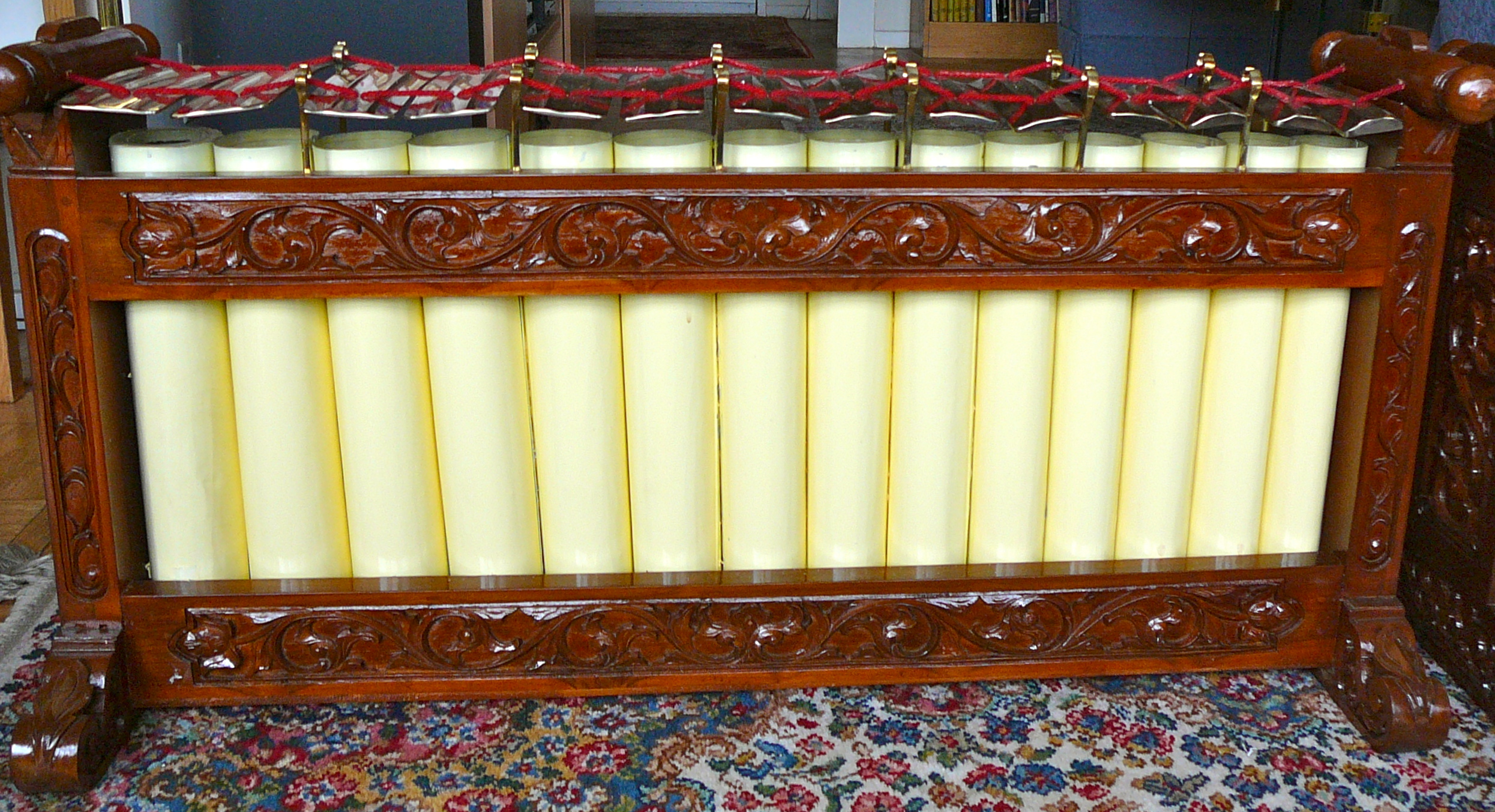
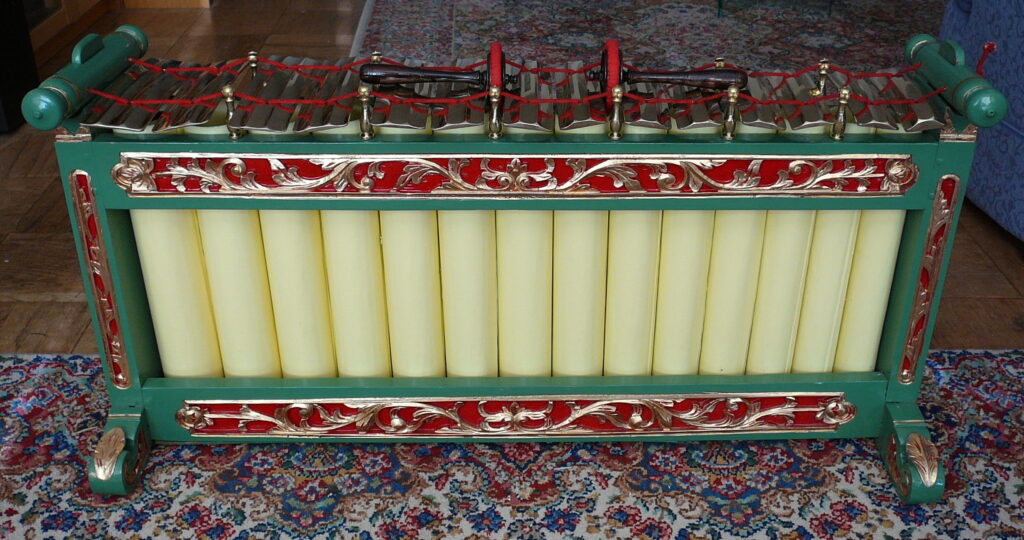
    Although the pelog scale consists of 7 pitches, the pelog gender uses only 5 pitches, either 1 – 2 – 3 – 5 – 6 in pelog bem or 7 – 2 – 3 – 5 – 6 in pelog barang. This allows the gender player to play the same patterns in pelog as in slendro (which has 5 pitches). Thus, a complete pelog gamelan must have 2 gender barung and 2 gender panerus, as it is inconvenient to replace the 1 and the 7 on the gender. Suhirdjan devised a pelog gender for which the pitches 1 and 7 were more easily exchanged without having to restring the entire row of keys. The replacement keys (either pitches 1 or 7) can be tied into place and either a weight to drop into the resonator or a partial cap for the resonator is used to tune the resonator to the appropriate pitch.


  • Nancy Cooper

    Nancy Cooper

    When I was doing fieldwork in Yogyakarta in 1989 and 1990, I commissioned a small slendro Yogyanese gamelan from Ki Suhirdjan. Due to budget and space constraints, I requested a very simple set of brass and iron instruments with the gongs made from recycled oil barrels. It is amazing to hear the deep resonance that these humble gongs produce. The gender and slenthem have brass keys and the saron and bonang (with brass bosses) are iron. Overall, Dewi Sri has a lovely bright sound and Ki Suhirdjan’s original tuning has remained remarkably stable all these years.

    As I do not have a lot of space in my apartment, I had a kenong renteng made in place of full sized kenong and frames. Each kenong pitch is represented on a brass slab like a slenthem key with a raised boss. In addition there is a kethuk key. I asked for a rosewood stain for the frames with gold highlights for the carved motif and the name Sri in honor of the rice goddess, in a circle in Javanese script and was quite pleased with the results.

    Every time I look at or play on Dewi Sri, or see photos of her performances, I think of Mas Hirdjan and how kind and gentle he was. It goes without saying that he was a fabulous kendhang player with such graceful hands. Ki Suhirdjan will always have a very special place in my heart and somehow I feel that a part of him resides with Dewi Sri.


  • Naprstek Museum

    In 1989, the Friends of Javanese Culture ordered a simple iron slendro gamelan for the Naprstek Museum in Prague, Republic of Czech. It was the first gamelan in the Czech Republic.


  • Open Arts

    Open Arts

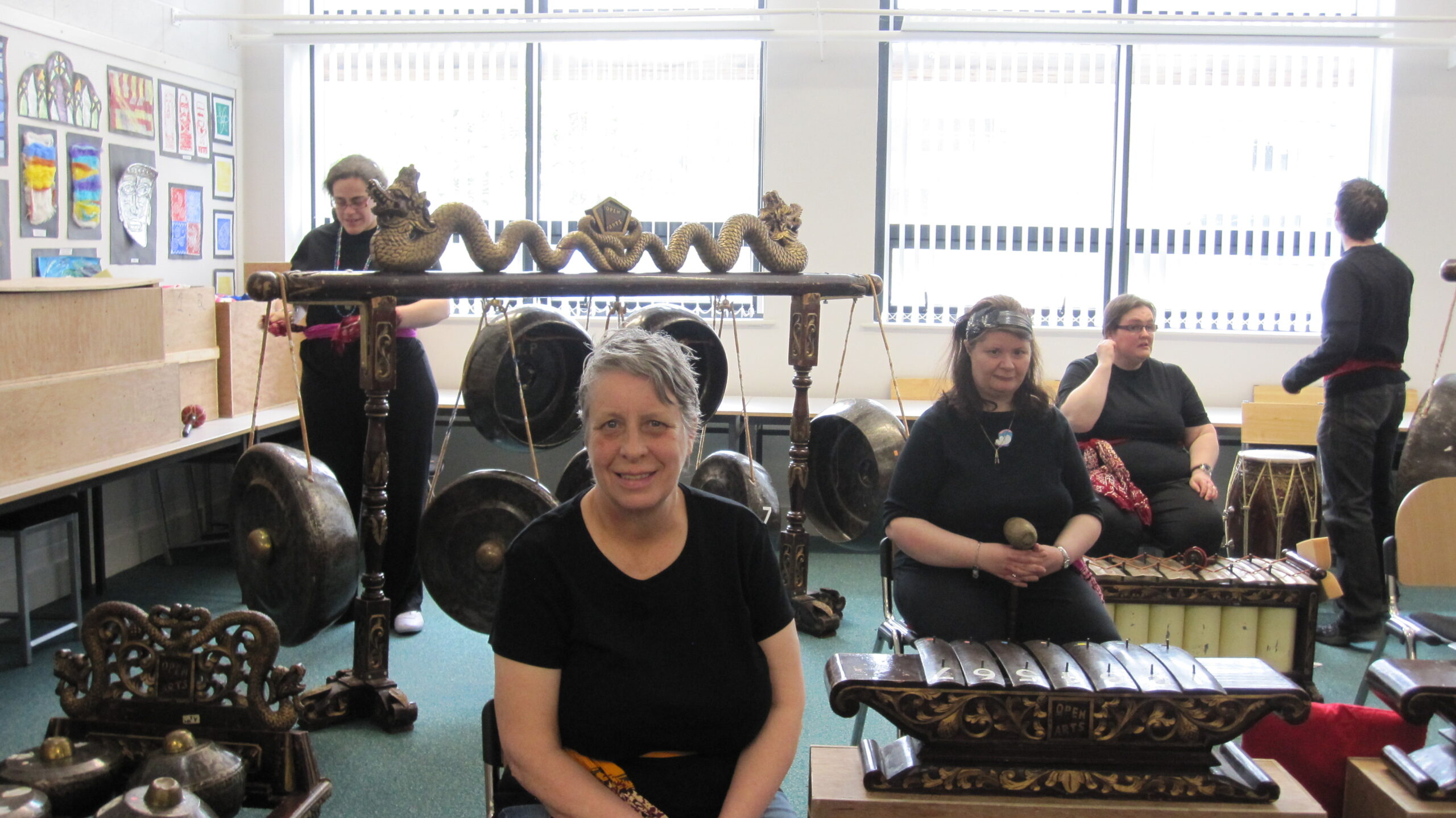
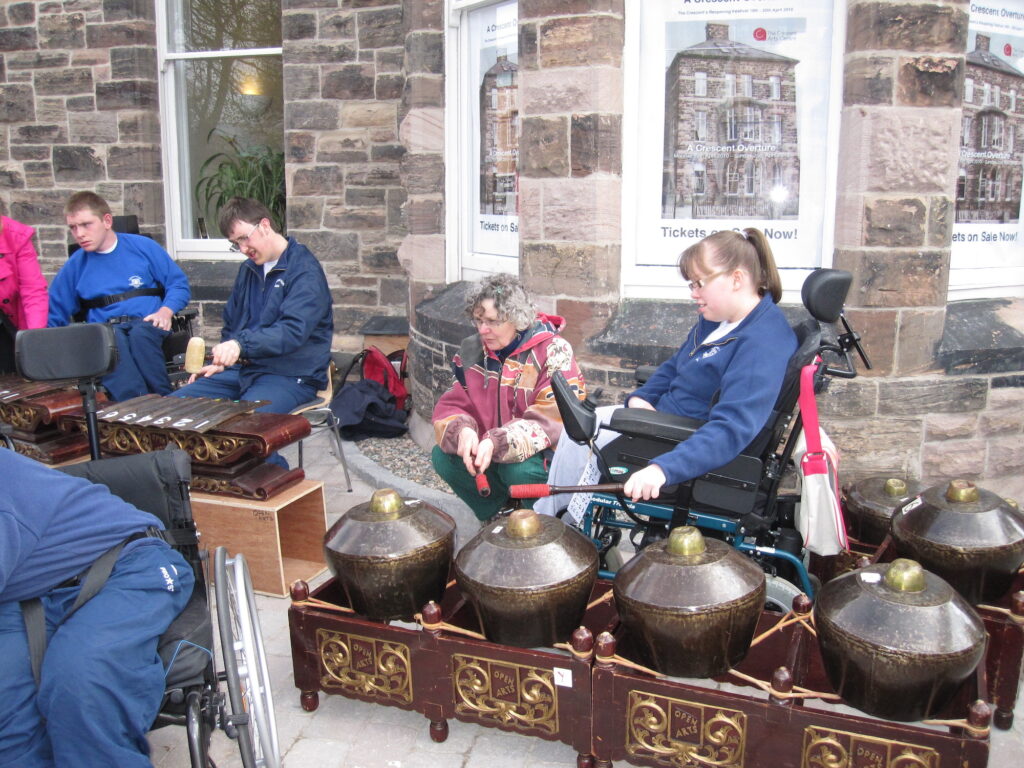
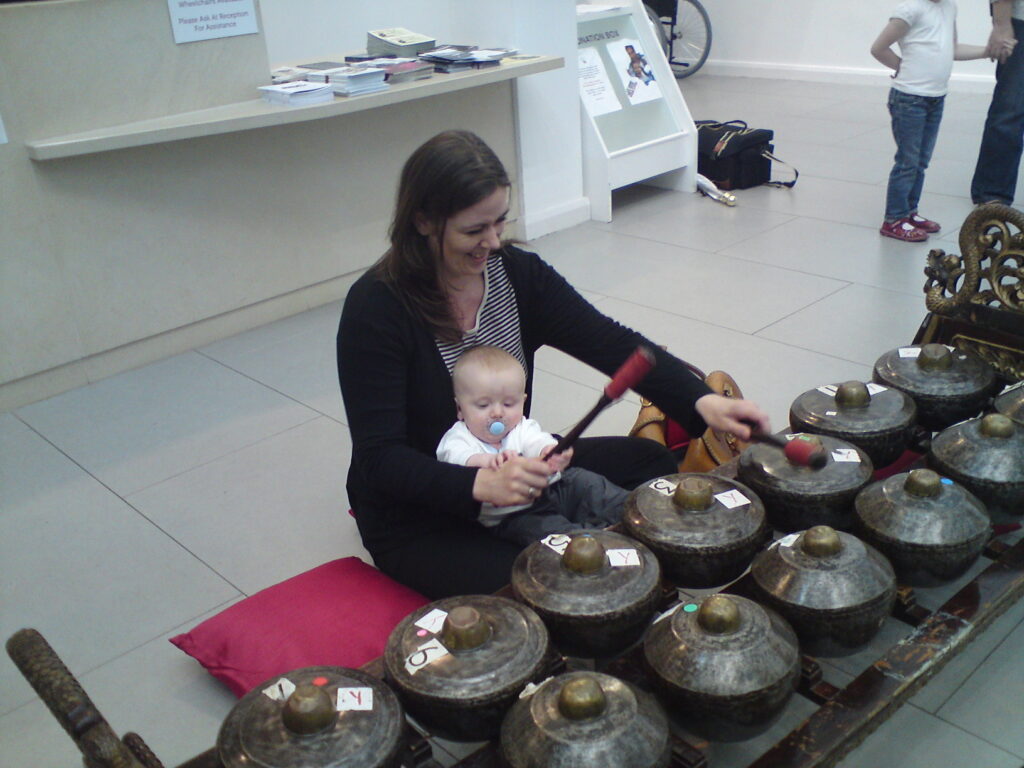
    We are based in Belfast, Northern Ireland. We use our lovely gamelan for community groups and often with people with disabilities, so it’s become a little battered over the years, but it still attracts a huge amount of attention and it is still beautiful. We play it outside in the summer some days, in parks and outside the City Hall and it visits places like museums and schools. It is usually based in Stranmillis College.

    Our gamelan has travelled all over Northern Ireland but it recognises no borders. It has been down to Cork, to Galway and to Dublin in the Republic of Ireland where it has brought the same pleasure to the groups who play it!


  • St Aloysius College

    St Aloysius College

    At St Aloysius College we have taken gamelan into our heart!

    We are grateful to Mas Suhirdjan for making and tuning our gamelan for us. His photo is on the wall of our gamelan room.

    The original instruments were purchased in 2002. The program has been supported and encouraged by the vision of our Principal Sister Judith Redden. Deetje and Hannah Tunstill (Flinders University gamelan) played an important role in training senior Music students during the early years. Since then, more instruments have been added and introductory gamelan lessons have become an established part of our Music curriculum.

    In 2011 an Australian government Building Asia Literacy grant enabled us to employ Dodi Darmadi (a specialist performer and kendang player, trained in Bandung, West Java) as our gamelan musician in residence. Five year olds were included in the program for the first time. Classroom teachers also had a taste of gamelan and the Music teachers extended their skills. A children’s performance group Gamelan Melati was formed and invited to perform at public events. The gamelan program continues to flourish!

    Barbara Burr
    barburr@me.com


  • Toronto District School Board

    Toronto District School Board

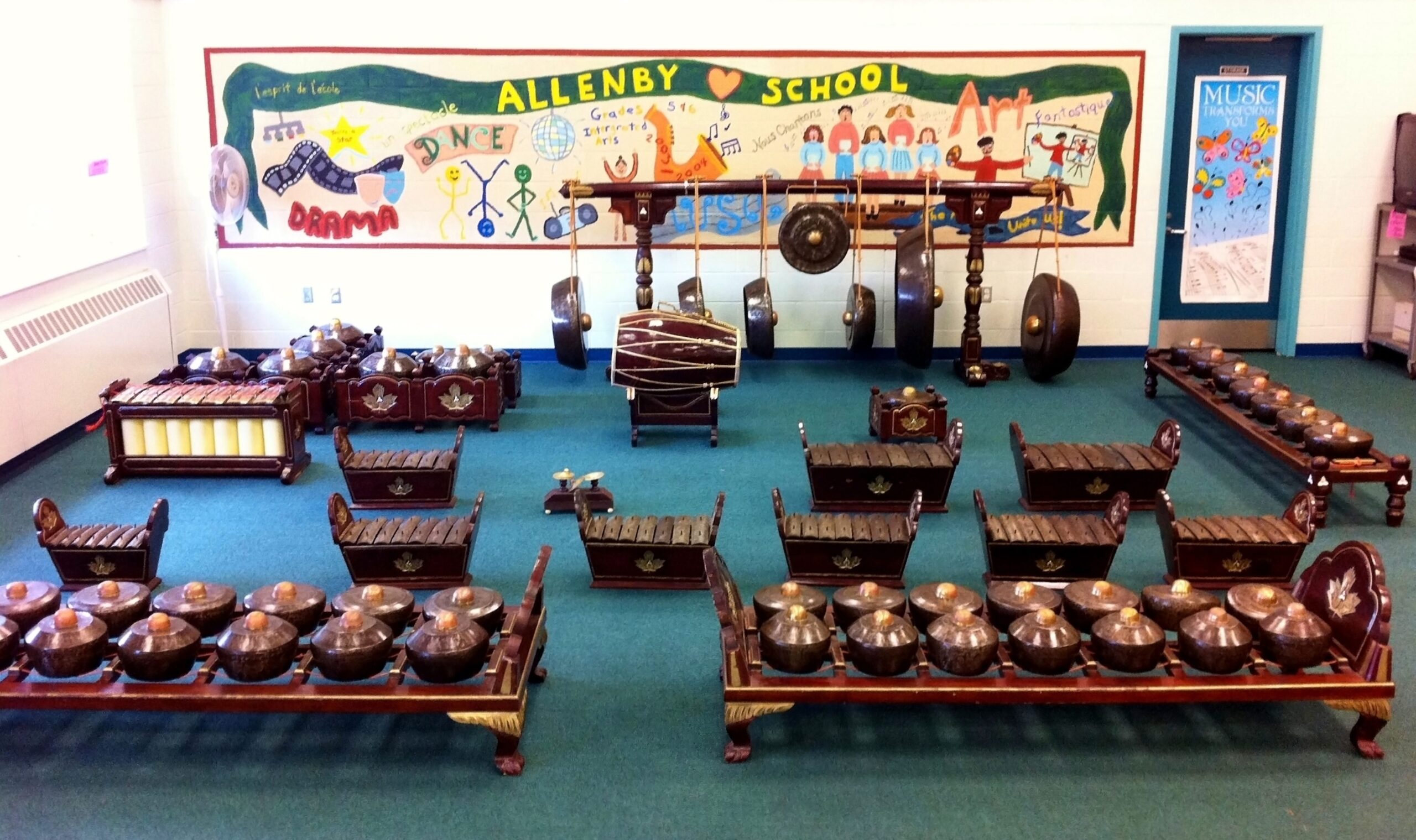
    Though I didn’t know him very well personally, I will never forget Suhirdjan’s innovative spirit. He was of immeasurable help guiding me through my first gamelan ordering experience in 2000-2001. The two (later split into three) Suhirjan gamelans I ordered for the 450-school Toronto District School Board have stood the test of time and tens of thousands of young TDSB student hands, spreading Javanese culture throughout far-off Toronto, Ontario, Canada.

    I’d like to point out just one feature of the gamelans, the attractive result of a unique collaborative design. Carved into some of the instrument cases is a crest incorporating symbols of our two countries and regions. Out of the top lobe of a Canadian maple leaf grows the tail feathers of the Indonesian Garuda. They jointly frame two Javanese nagas protecting the trillium flower a symbol of the province of Ontario.

    I think Mas Hirdjan would have enjoyed knowing that his gamelans are cherished and actively being used for teaching in Toronto – in over 100 schools to date. His instruments are a testament to the innovation, careful workmanship and attention to quality and detail which were his hallmark, a living legacy which can be found in music making around the world.

    Andrew Timar
    York University, Toronto, Canada
    Founding Director, Gamelan Program, Toronto District School Board
    Founding member, Artistic Director Emeritus, Evergreen Club Contemporary Gamelan